GIP
An incretin released from the upper gut after a meal. It shapes the insulin response, and changes how fat tissue handles the energy it is given.
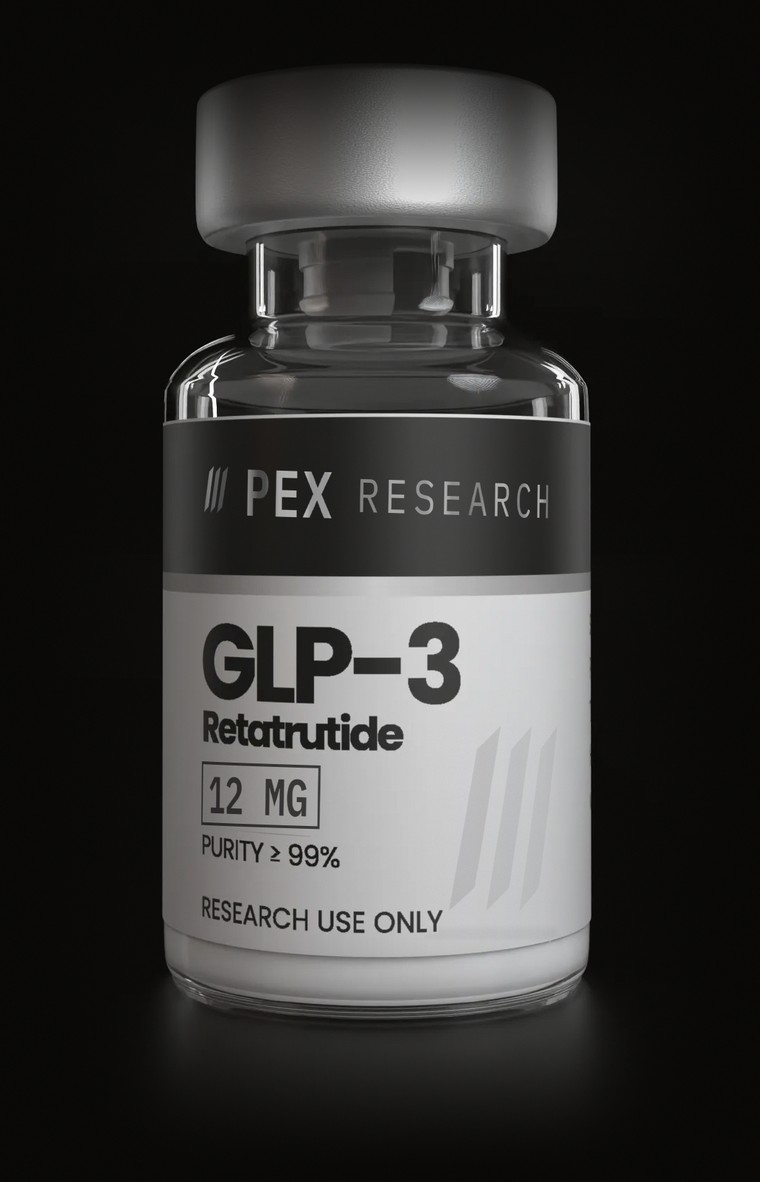
Semaglutide answers one receptor. Tirzepatide answers two. Retatrutide answers three — and that is the whole reason anyone calls it GLP‑3.
An incretin released from the upper gut after a meal. It shapes the insulin response, and changes how fat tissue handles the energy it is given.
The familiar door. Slows gastric emptying, sharpens glucose‑dependent insulin release, and quiets appetite signalling in the brainstem.
The one nobody expected. Glucagon ordinarily raises blood sugar, which makes it a strange thing to switch on. Here it is recruited for something else entirely.
Four strengths
Every claim on this page traces to a peer‑reviewed paper or a registered trial. The list is short enough to read.
TRIUMPH‑1 · phase 3 · 12 mg · eighty weeks
Mean reduction in body weight at week 80 among participants who took the drug as prescribed — the efficacy estimand. 2,339 adults randomised.
Topline results announced 21 May 2026 · detailed results to be presented at the 86th ADA Scientific Sessions and published in peer‑reviewed journals
The phase 2 obesity trial, reproduced here in full structure —
design, figure, adverse events, citation.
BackgroundRetatrutide is a single 39‑amino‑acid peptide with agonist activity at the GIP, GLP‑1 and glucagon receptors. Whether adding glucagon agonism to dual incretin agonism increases weight reduction was not known.
Methods338 adults with obesity were randomly assigned to placebo or to retatrutide at 1, 4, 8 or 12 mg once weekly for 48 weeks; the 4 and 8 mg groups each used two escalation schedules. The primary endpoint was the percentage change in body weight at week 24.
ResultsLeast‑squares mean change in body weight at week 24 was −7.2% at 1 mg, −12.9% at 4 mg, −17.3% at 8 mg and −17.5% at 12 mg, against −1.6% with placebo. By week 48 the 12 mg group had lost 24.2% of body weight. Gastrointestinal events were the most common and were dose‑related.
ConclusionsTriple agonism produced substantial, dose‑dependent weight reduction over 48 weeks in adults with obesity.
Condensed from the published abstract. Full text at the DOI below.
The 4 mg and 8 mg arms each pooled two escalation schedules. Values are least‑squares means.
Week 24 was the primary endpoint; week 48 was the end of treatment. Segments join the reported means and are not a fitted curve.
Table 1 Most common adverse events by dose, TRIUMPH‑1 (phase 3, 80 weeks). Percent of participants.
| Event | Placebo | 4 mg | 9 mg | 12 mg |
|---|---|---|---|---|
| Nausea | 14.8 | 28.6 | 38.4 | 42.4 |
| Diarrhoea | 13.5 | 25.2 | 34.1 | 32.0 |
| Constipation | 10.9 | 23.8 | 25.9 | 26.1 |
| Vomiting | 4.8 | 10.6 | 22.8 | 25.3 |
| Dysaesthesia | 0.9 | 5.1 | 12.3 | 12.5 |
| Urinary tract infection | 5.3 | 7.5 | 8.8 | 8.4 |
| Discontinued due to adverse event | 4.9 | 4.1 | 6.9 | 11.3 |
Jastreboff AM, et al. Triple–Hormone-Receptor Agonist Retatrutide for Obesity — A Phase 2 Trial. N Engl J Med. 2023;389(6):514–526.
10.1056/NEJMoa2301972 ↗
Discovery to phase 3, in order.
Each row links to the paper.
Every trial below is registered on ClinicalTrials.gov
and can be read in full by anyone.
Obesity or overweight without type 2 diabetes. 2,339 randomised, 80 weeks with a 104‑week extension.
NCT05929066 ↗ ReportedObesity with knee osteoarthritis. 445 randomised, 68 weeks. Co‑primary endpoints on weight and WOMAC pain.
NCT05931367 ↗ ReportedCardiovascular and kidney outcomes in adults living with obesity — the long‑horizon question.
NCT06383390 ↗ Ongoing